mick's blog

January 21, 2026

Lola Flores

María DoloresLolaFlores Ruiz (21 January 1923 – 16 May 1995) was a Spanish actress, bailaora (flamenco dancer) and singer. Born in Jerez de la Frontera, Flores became interested in the performing arts at a very young age. Known for her overwhelming personality onstage, she debuted as a dancer at age sixteen at the stage production Luces de España, in her hometown. After being discovered by film director Fernando Mignoni, Flores moved to Madrid to pursue a professional career in music and film, with her first gig being the lead role in Mignoni’s Martingala (1940). Flores succeeded as a film and stage actress. In 1943 she obtained her breakthrough role in the musical stage production Zambra alongside Manolo Caracol, in which she sang original compositions by Rafael de León, Manuel López-Quiroga Miquel and Antonio Quintero, including “La Zarzamora” and “La Niña de Fuego“, mostly singing flamenco music, copla, rumba and ranchera. She then started to receive widespread media coverage.

In 1951, Flores signed a five-film contract with Suevia Films for a value of 6 million pesetas, which became the largest contract for a performing artist in Spanish history. Under that contract she starred in major productions like La Niña de la Venta (1951), ¡Ay, Pena, Penita, Pena! (1953), La Danza de los Deseos(1954) and El Balcón de la Luna (1962), among many others, which spawned the signature songs “A tu Vera” and “¡Ay, Pena, Penita, Pena!“. Since then, she was popularly dubbed as la Faraona (“the Pharaoh”). During her life, Flores performed in more than 35 films, pigeonholed, in many of them, in Andalusianfolklore. As a bailaora, Flores enraged several generations of continents, although she distanced herself from flamenco canons. She also recorded over twenty albums, which she toured through Europe, Latin America and the United States.

Her strong personality, recognizable image, remarkable professional trajectory and sometimes controversial personal life, have turned Flores into a Spanish pop culture icon. She is often cited as the “biggest exporter of Andalusian culture to date” as well as a “pioneer”, being tributed many times in recent television series and documentaries such as the biographical film Lola, la Película (2007). Lola became the matriarch of what would later be the Flores family, filled with popular singers and television personalities such as Lolita Flores, Rosario, Alba Flores and Elena Furiase. In 1995, Lola Flores died, aged 72, in Alcobendas due to health complications caused by a breast cancer.

read more...
January 21, 2026

Celestial Antiquity NGC 1365

A mere 56 million light-years distant toward the southern constellation Fornax, NGC 1365 is an enormous barred spiral galaxy about 200,000 light-years in diameter. That’s twice the size of our own barred spiral Milky Way. This sharp image from the James Webb Space Telescope‘s Mid-Infrared Instrument (MIRI) reveals stunning details of this magnificent spiral in infrared light. Webb’s field of view stretches about 60,000 light-years across NGC 1365, exploring the galaxy’s core and bright newborn star clusters. The intricate network of dusty filaments and bubbles is created by young stars along spiral arms winding from the galaxy’s central bar. Astronomers suspect the gravitational field of NGC 1365’s bar plays a crucial role in the galaxy’s evolution, funneling gas and dust into a star-forming maelstrom and ultimately feeding material into the active galaxy’s central, supermassive black hole.

read more...
January 21, 2026

Snooks Eaglin

Fird Eaglin Jr. (January 21, 1936 or 1937 – February 18, 2009), known as Snooks Eaglin, was an American guitarist and singer based in New Orleans. In his early years he was sometimes credited under other names, including Blind Snooks Eaglin, “Lil” Snook, Ford Eaglin, Blind Guitar Ferd.

His vocal style was reminiscent of that of Ray Charles; in the 1950s, when he was in his late teens, he sometimes billed himself as “Little Ray Charles”. He played a wide range of styles of music within the same concert, album, or even song: blues, rock and roll, jazz, country, and Latin. In his early years, he also played acoustic blues.

His ability to play a wide range of songs and make them his own earned him the nickname “The Human Jukebox.” Eaglin claimed in interviews that his musical repertoire included some 2,500 songs.

At live shows, he usually did not prepare set lists and was unpredictable, even to his bandmates. He played songs that came to him on stage, and he also took requests from the audience.

read more...
January 21, 2026

Richie Havens

Richard Pierce Havens (January 21, 1941 – April 22, 2013 NY, NY) was an American singer-songwriter and guitarist. His music encompassed elements of folk, soul (both of which he frequently covered), and rhythm and blues. He had a rhythmic guitar style (often in open tunings). He was the opening act at Woodstock, sang many jingles for television commercials, and was also the voice of the GeoSafari toys.


read more...
January 20, 2026

Hostages

read more...
January 20, 2026

Protest

read more...
January 20, 2026

Celestial Antiquity HD 121617

Not all rings are forged in fantasy, my precious! For astronomers, they are found in space. The ones in today’s Picture of the Week are debris discs: the leftovers of planet formation around other stars.

Even our Solar System has a debris disc, known as the Kuiper Belt, where numerous asteroids and comets encircle the Sun beyond Neptune’s orbit. It is believed that the influence of large planets like Neptune prevented the dust and pebbles in this region from clumping together and forming larger bodies. Therefore, debris discs can be seen as remnants of planetary formation, and studying those around other stars is key to understanding the birth of planetary systems.

Using the Atacama Large Millimeter/submillimeter Array (ALMA), a team of astronomers has obtained high-resolution images of 24 debris discs around other stars. The orange images in this Picture of the Week show the distribution of dust in these discs, and the blue ones the distribution of gas in 6 of them.

The origin of gas in debris discs is debated: it could be leftover primordial gas that was present around the star from the beginning, or gas released later on as dust grains collided with each other. The debris disc around the star HD 121617, shown here in the two images at the top-right, is very interesting in this regard. The dust ring (orange) is brighter on one side, indicating a higher concentration of dust grains there. The team found that a vortex of gas could trap dust particles there, but only if the density of gas is very high. Such a high density of gas would be more consistent with this gas being of primordial origin. Further analysis of the full sample of debris discs will tell us more about the secrets of these precious rings.

read more...
January 20, 2026

Walter Piston

Walter Hamor Piston, Jr. (January 20, 1894 – November 12, 1976), was an American composer of classical music, music theorist, and professor of music at Harvard University.

During the 1910s, Piston made a living playing piano and violin in dance bands and later playing violin in orchestras led by Georges Longy. During World War I, he joined the U.S. Navy as a band musician after rapidly teaching himself to play saxophone; he later stated that, when “it became obvious that everybody had to go into the service, I wanted to go in as a musician”. While playing in a service band, he taught himself to play most wind instruments. “They were just lying around,” he later observed, “and no one minded if you picked them up and found out what they could do”.

Piston was admitted to Harvard College in 1920, where he studied counterpoint with Archibald Davison, canon and fugue with Clifford Heilman, advanced harmony with Edward Ballantine, and composition and music history with Edward Burlingame Hill. He often worked as an assistant for various music professors there, and conducted the student orchestra.

read more...
January 20, 2026

Jeff “Tain” Watts

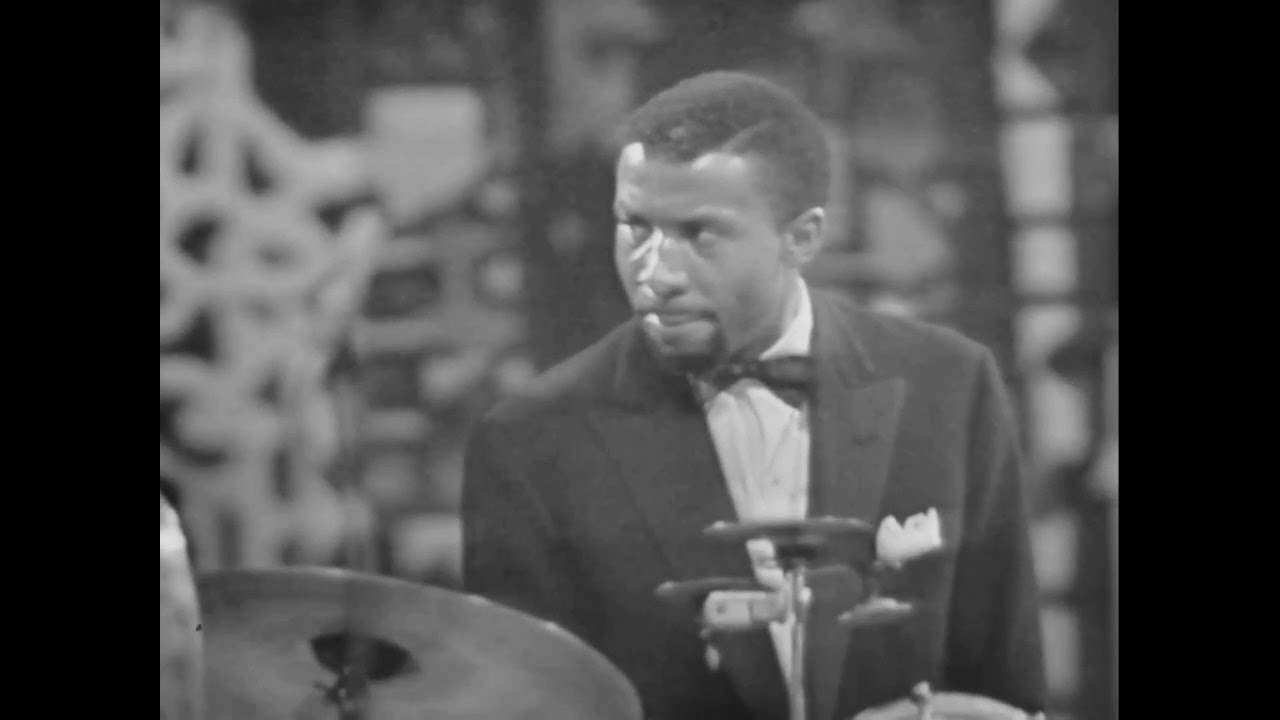
JeffTainWatts (born January 20, 1960 Easton, PA) is an American jazz drummer who has performed with Wynton Marsalis, Branford Marsalis, Betty Carter, Michael Brecker, Alice Coltrane, Ravi Coltrane, and others.

Watts got the nickname “Tain” from Kenny Kirkland when they were on tour in Florida and drove past a Chieftain gas station. He was given a Guggenheim fellowship in music composition in 2017. Watts attended Berklee College of Music, where he met collaborator Branford Marsalis.

read more...